Ten kilometres from the runway
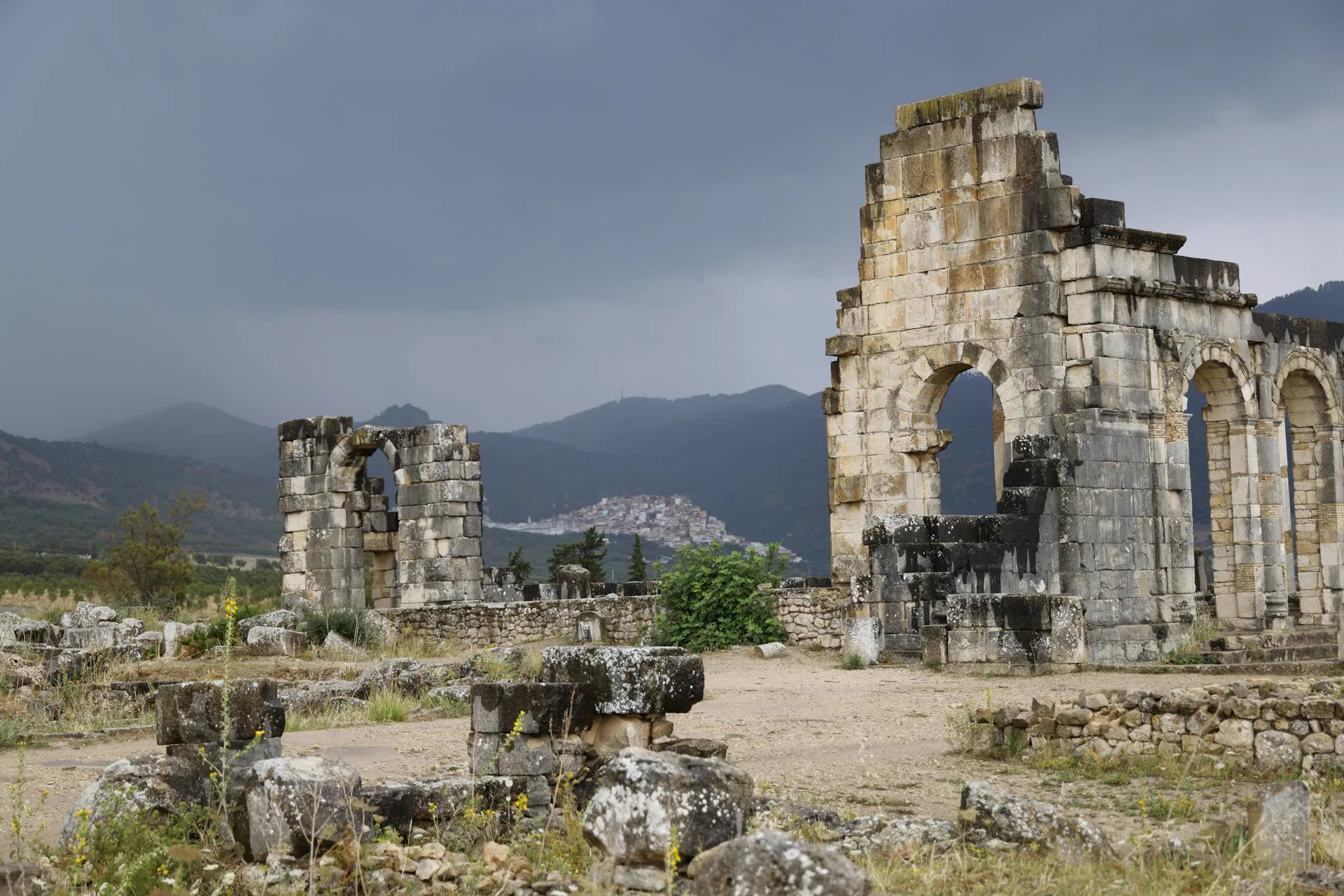
North of the airport, on a flat terrace where the Zeta joins the Moraca, are the foundations of a Roman city. Duklja, or Doclea in Latin, was founded in the late first century and was the largest city in this part of Illyria. It is fifteen minutes from the airport pickup, it is free, it is unfenced, and most of the year you will share it with a couple of archaeology students and some sheep.
It is also the most forgiving thing to point a rental car at on arrival day. You have a car you have never driven and roads you do not know, the site is close enough that you are parked before any of that matters, and there is nothing at the far end to be late for.
Finding the turnoff
Head out of the airport toward Podgorica, continue onto the M2 and then the western bypass, which is the same road you would take toward Ostrog. About four kilometres past the city centre, watch for signs to Rogami and a single brown marker for Duklja pointing right off the main road. It is small and easy to miss, so slow early rather than braking late.
The turnoff runs about 1.5 km on a narrow but paved lane past houses and gardens before opening onto the terrace. There is no car park; you stop on the verge. Pull two wheels off the lane if you can, because tractors and delivery vans still need to get past.
What the drive asks of the car
Almost nothing, and that is worth saying because the lane looks like it might. It is sealed the whole way and needs no ground clearance. A compact is easier to place on a single-track lane with a hedge on one side than something larger, and since there is no shade on the terrace at all, working air conditioning matters more here than four-wheel drive ever will.
What is actually there
Walking the site takes an hour or so at an unhurried pace, on paths worn informally through the grass. Four things are worth finding: the best-preserved stretch of city wall along the southern edge above the river, courses of dressed limestone a couple of metres tall; the forum, a paved rectangle with column bases still in place on three sides; the bath house in the north-west quarter, where the short stacked-brick pillars that held up the heated floor are unmistakable; and the necropolis outside the walls to the east, a scatter of stone sarcophagi, some with Latin still legible.
The site was quarried for building stone for over a thousand years, which is why nothing stands higher than it does. What was carried off in the other direction, the coins, inscriptions and statuary, is in the archaeological museum in central Podgorica, and forty minutes there makes the outdoor site considerably more legible.
When to go
Morning until about ten, or late afternoon in summer. The low sun picks out the wall courses and the forum paving, and the middle of a July day is punishing here: no shade, stone radiating heat, and the plain regularly touching the high thirties. Take a litre of water each, because there is nothing on site and nothing within walking distance.
Winter is genuinely pleasant, mild and green and completely empty. Avoid the day after heavy rain, when parts of the terrace drain slowly and the verge you are parking on turns soft.
Pairing it with the drive north
The Rogami turnoff sits a few kilometres off the main road north, so an hour here costs almost nothing from a bigger itinerary. It goes naturally with the Ostrog drive, same direction and same day, two religious sites seventeen centuries apart. The Durmitor run is better as a dedicated day, so this pairs with it only on an unhurried return.