Live availability for your dates. Pickups cover the airports, the coast, Podgorica and the mountain towns.
Built for Montenegrin roadsDriving in Montenegro
Montenegro is small and slow, and the car you book matters less here than the time you allow. Nowhere is more than a few hours from anywhere else in a straight line, and almost every journey takes longer than the distance implies, because the roads follow water and contour rather than going where you are going. Budget by the clock rather than the map and the driving becomes a pleasure.
The good news is that it is easier than its reputation. The main routes are sealed, modern and well surfaced, the one motorway has removed the worst of the northern drive, and the roads that genuinely demand something of a driver are optional rather than unavoidable.
What the Roads Are Actually Like
There are effectively three kinds. The motorway and dual carriageway network around Podgorica and north toward Kolasin is modern and fast. The main routes between towns are two-lane, well surfaced and unremarkable. And the coastal and mountain roads are narrow, winding and slow, which is where all the character and all the extra time comes from.
The two stretches people remember are the Moraca canyon road north and the serpentine climbs on the coast. Neither is dangerous in good weather and both reward patience over speed. Local drivers overtake on bends you would not choose, cluster in the left lane and indicate late, so leave more room than you would at home.
Headlights are required day and night, all year, and it is enforced. Speed cameras sit on the main approaches and are generally signposted. The alcohol limit is 0.03%, effectively zero.
Tolls, Fuel and Paperwork
There is exactly one toll in the country, at the Sozina tunnel between Podgorica and the coast, and its booth takes cash or card around the clock. There is no motorway sticker, no app and no vignette. If anyone suggests otherwise, decline.
Fuel is consistently cheaper around Podgorica than on the coast or in the mountains, so topping up there before a long drive is worth the small detour. Stations are plentiful on the main routes and sparse on the mountain roads, where it is worth not running the tank down.
Season by Season
July and August are hot and busy. The coast road carries every visitor on the riviera at once, parking in the old towns fills by mid-morning, and air conditioning stops being optional by late morning. The driving is easy; the queuing is not. Budva feels it worst.
Spring and autumn are the best of it. The roads empty, the temperatures are comfortable, and the mountain routes are open and clear. If the trip is flexible, this is when the country drives best.
Between November and March the cars carry winter equipment, which is what makes the mountains a reasonable proposition rather than a gamble. The plain rarely sees snow, the coast almost never does, and the high roads north can close after fresh falls. Fog on the plain overnight is the other seasonal factor worth knowing about.
Availability moves sharply with the season, and the car that suits the mountains is not the one that suits coastal parking.
Free cancellation more than 24 hours before pickup.
Which Car for Which Trip
Three decisions, and they pull in different directions. Size is decided by parking: the coastal old towns have tight bays that fill early, so a compact is worth more there than comfort is. Engine is decided by altitude, since small petrol units lose noticeable power climbing to Kolasin or Zabljak while turbo and diesel barely notice. Gearbox is decided by hills and traffic, and automatics sell out first in summer.
Almost nothing here needs four-wheel drive. The standard circuit is sealed road throughout, including Durmitor and Ostrog; a 4x4 only earns its place on unsurfaced tracks. The breakdown of what each class handles goes through it properly.
Crossing a Border
Albania, Croatia, Bosnia, Serbia and Kosovo are all reachable, and several are closer than you would think from Podgorica. Any of them needs cross-border cover selected as an additional option during booking and a Green Card issued for the vehicle, both arranged before collection rather than at the barrier.
Queues are the variable rather than the paperwork, worst on summer weekends and around holidays, and they queue in both directions. The requirements for each crossing are set out in full separately.
Where to Start From
Most trips begin at Podgorica Airport, which puts the mountains, the lake and the Albanian border within an hour and the coast within two.
Tivat Airport is the coastal alternative, better placed for the bay towns and worse for everything else, and Dubrovnik Airport works if the fares suit, with the border paperwork that implies.
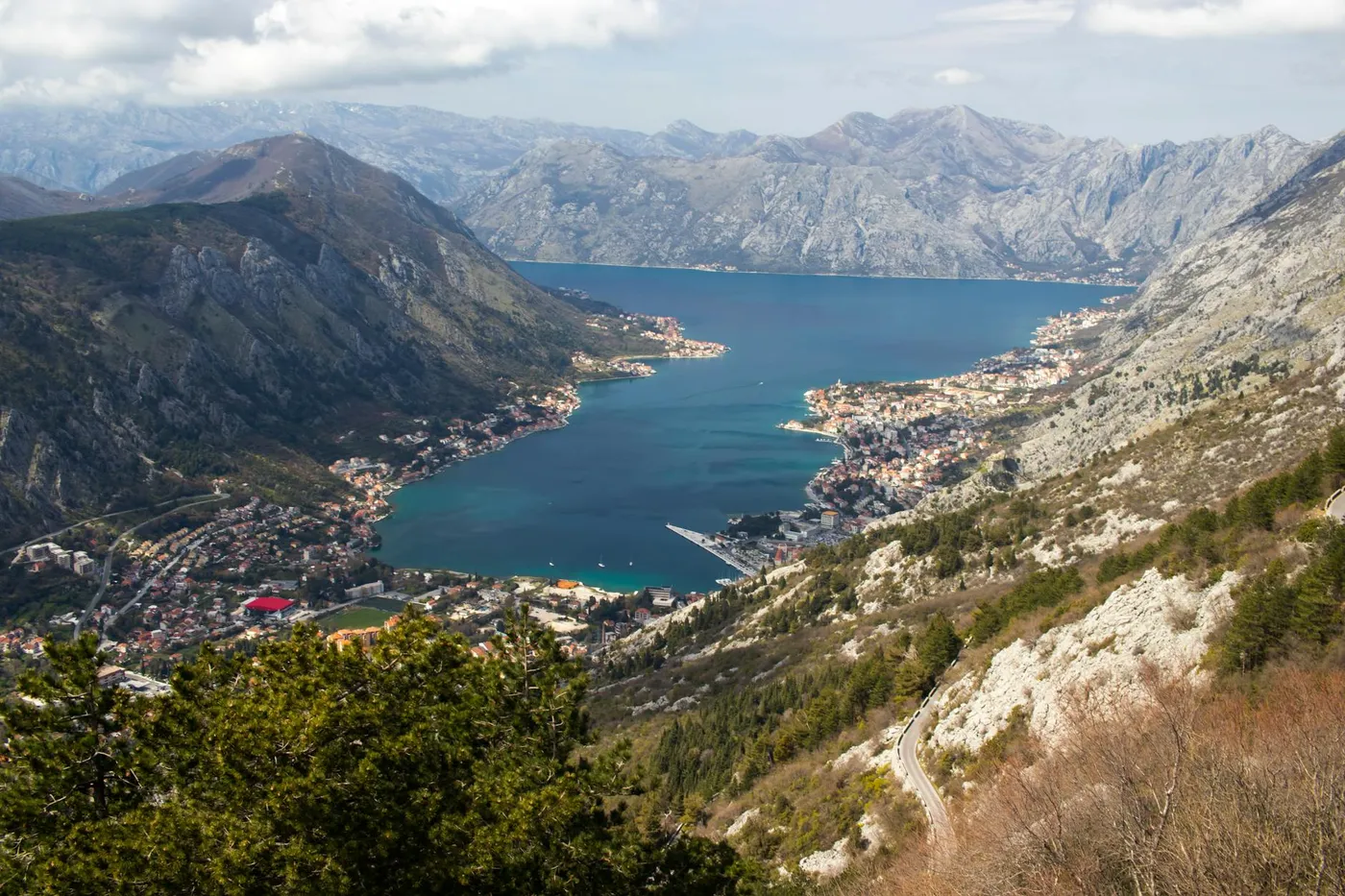
From there the towns have their own pages. Kotor and Perast sit on the inner bay, Tivat covers the outer bay, Budva the open coast, and Podgorica the capital and the roads north.
Check availability for your dates and pickup point.
Free cancellation more than 24 hours before pickup